What Is the Dzhanibekov Effect and How Does It Work?
TL;DR
The Dzhanibekov Effect, also known as the Intermediate Axis Theorem, is a phenomenon where an object flips uncontrollably when rotating around its intermediate axis due to having three distinct moments of inertia. This counterintuitive behavior was observed by cosmonaut Vladimir Dzhanibekov in 1985 and can be seen in various objects, including tennis rackets and cell phones.
Transcript
I want to thank the sponsor of this episode, LastPass, which remembers your passwords so you don't have to More about them at the end of the show What you are looking at is known as the Dzhanibekov effect or the tennis racket theorem or the intermediate axis theorem but we'll get to that Now you may have seen clips like this one before, but in this... Read More
Key Insights
- 🐬 The Dzhanibekov Effect, also known as the Intermediate Axis Theorem or the Tennis Racket Theorem, is a phenomenon where an object flips back and forth when rotating around its intermediate axis.
- 👾 The Dzhanibekov Effect was discovered by cosmonaut Vladimir Dzhanibekov in 1985 while working on the Soviet space station Salyut 7.
- 🔀 The Intermediate Axis Theorem explains the Dzhanibekov Effect and states that when an object with three different moments of inertia rotates around its intermediate axis, it will experience a half-twist motion that is uncontrollable.
- 🕳️ The Dzhanibekov Effect is not limited to tennis rackets and has been observed with objects like cell phones and discs with holes.
- ✋ Objects that demonstrate the Dzhanibekov Effect have three different moments of inertia about their three principal axes, making them asymmetric tops.
- 🤨 The Dzhanibekov Effect was kept secret by the Russians for ten years, possibly due to the implications it raised about the Earth potentially flipping over.
- 🐬 The Earth is unlikely to flip over since it rotates around its axis with the maximum moment of inertia, which is stable.
Install to Summarize YouTube Videos and Get Transcripts
Explore YouTube Video Summarizer or Get YouTube Transcript Extractor
Questions & Answers
Q: What is the Dzhanibekov Effect and how was it discovered?
The Dzhanibekov Effect refers to the phenomenon where an object flips back and forth when rotating around its intermediate axis. It was discovered by cosmonaut Vladimir Dzhanibekov in 1985 while working on the Soviet space station Salyut 7.
Q: What is the Intermediate Axis Theorem?
The Intermediate Axis Theorem states that when an object with three different moments of inertia rotates around its intermediate axis, it will experience a half-twist motion that is uncontrollable. This theorem explains the Dzhanibekov Effect.
Q: Can the Dzhanibekov Effect occur with objects other than tennis rackets?
Yes, the Dzhanibekov Effect can occur with various objects that have three different moments of inertia about their three principal axes. It has been observed with objects like cell phones and discs with holes.
Q: Why was the Dzhanibekov Effect kept secret by the Russians for ten years?
The secrecy surrounding the Dzhanibekov Effect is possibly due to the implications that arose from experiments involving a spinning ball of modeling clay or plasticine. It raised questions about the Earth potentially flipping over, which led to speculation and conspiracy theories.
Summary & Key Takeaways
-
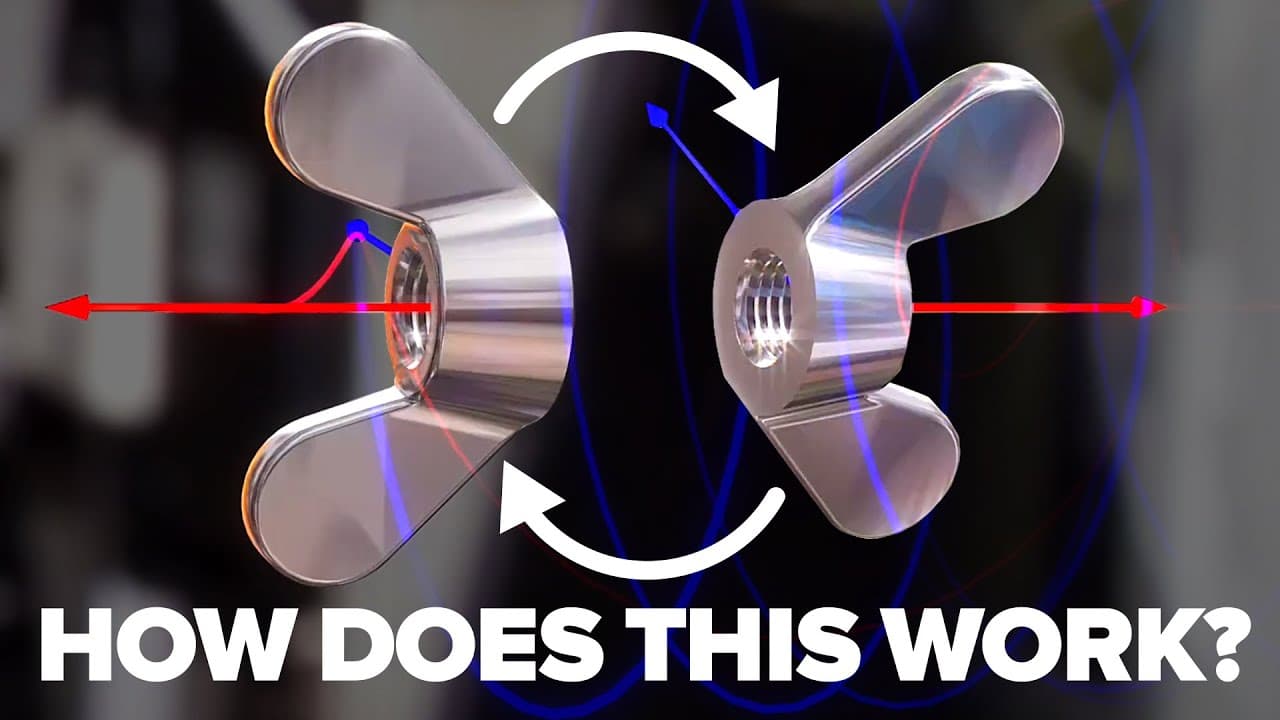
In 1985, cosmonaut Vladimir Dzhanibekov observed the Dzhanibekov Effect while rescuing the Soviet space station Salyut 7. The wing-nut he was working with maintained its orientation for a short time, then flipped 180 degrees and continued flipping back and forth.
-
The Dzhanibekov Effect is related to the Intermediate Axis Theorem, which states that when an object with three different moments of inertia rotates around its intermediate axis, it will experience a half-twist motion that is uncontrollable.
-
The phenomenon of the Dzhanibekov Effect is not limited to tennis rackets and can occur with other objects, such as cell phones and discs with holes. It requires an object to have three different moments of inertia about its three principal axes.
Read in Other Languages (beta)
Share This Summary 📚
Summarize YouTube Videos and Get Video Transcripts with 1-Click
Try YouTube Summary with ChatGPT & Claude or YouTube Transcript Generator
Explore More Summaries from Veritasium 📚






Summarize YouTube Videos and Get Video Transcripts with 1-Click
Try YouTube Summary with ChatGPT & Claude or YouTube Transcript Generator