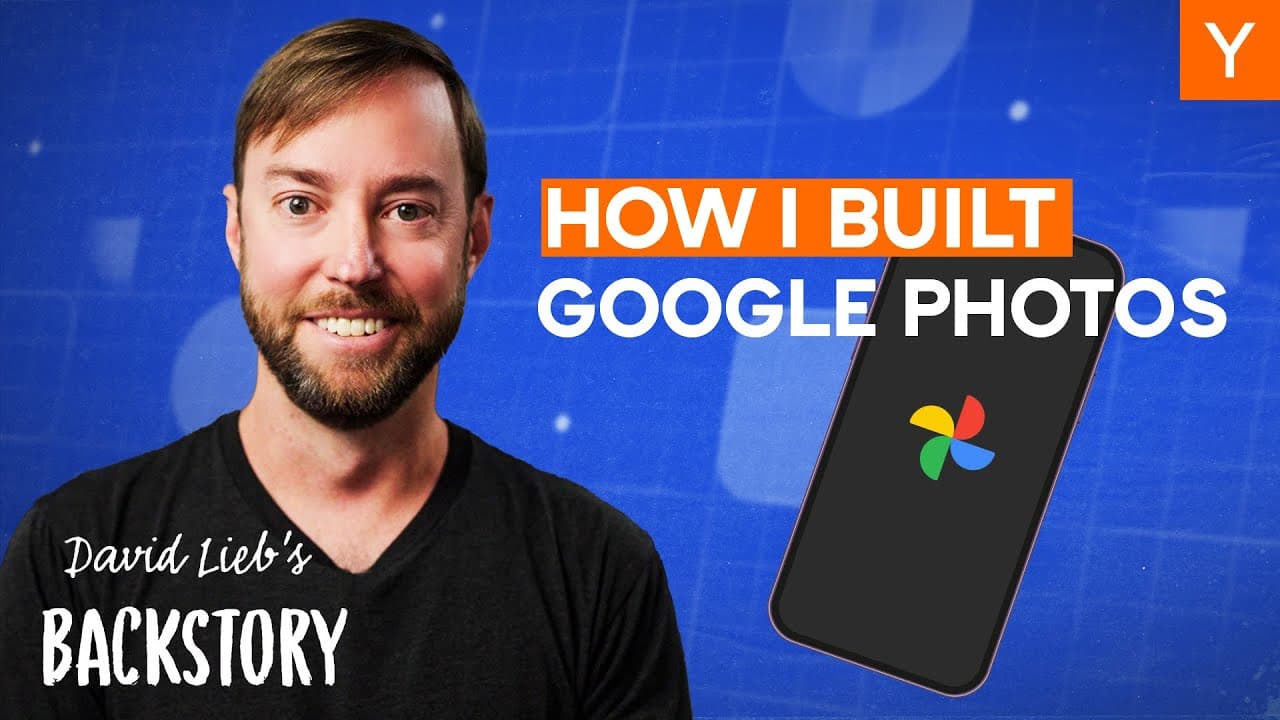
How David Lieb Turned a Failing Startup Into Google Photos | Backstory
TL;DR
David Leeb shares his journey from failed startups to leading Google Photos.
Transcript
if you want to create something that billions of people will use a brand new product Google photos you have to be totally committed and you have to realize that the path to success is very rarely a straight line and you're almost certainly going to fail a few times or be thrown a curveball that you weren't expecting just talk to the ER nurse here i... Read More
Key Insights
- 💪 An engineering background can provide a strong foundation for transitioning into entrepreneurship.
- 👤 Product-market fit should prioritize high-frequency use in user applications to ensure sustainability and engagement.
- 👤 Direct user feedback is essential in guiding product development and identifying unforeseen usage patterns.
- 🤔 Adaptive thinking and willingness to pivot can lead to new opportunities, even after setbacks.
- 🥺 Collaborating with a diverse team can enhance product innovation and lead to unconventional solutions.
- 👻 Continuous learning from failures is crucial in the startup process, allowing for refining strategies and improving outcomes.
- ❓ Mentorship roles can be fulfilling, contributing to the growth of future entrepreneurs and the innovation landscape.
Install to Summarize YouTube Videos and Get Transcripts
Explore YouTube Video Summarizer or Get YouTube Transcript Extractor
Questions & Answers
Q: What triggered David Leeb's shift from academia to entrepreneurship?
David Leeb’s transition from academia came after reading about the sale of YouTube, which made him realize that young entrepreneurs could achieve significant success. This inspired him to pursue more practical endeavors by creating Bump, a social app that addressed real-world problems he identified during business school.
Q: What key lessons did Leeb learn while building Bump?
Leeb learned that success often involves trial and error. He recognized the importance of understanding user needs through direct feedback and emphasized the value of high-frequency, high-value interactions in building a sustainable product. He also highlighted the pitfalls of fast growth without a solid business model.
Q: How did Leeb's near-death experience impact his career choices?
After being diagnosed with leukemia, Leeb reevaluated his life priorities and realized he wanted to work in environments that foster innovation, rather than bureaucracy. This led him to leave Google and join Y Combinator, allowing him to coach and mentor new founders while sharing his lessons learned.
Q: What role did user feedback play in the development of Bump and Flock?
User feedback was crucial for both Bump and its successor, Flock. Leeb emphasized reaching out to top users to understand how they were using the app, which ultimately guided them in pivoting their focus towards developing a photo-sharing product that aligned more closely with actual user needs.
Q: What was the outcome of Google Photos after its launch?
Google Photos experienced rapid success, reaching over a billion users in less than four years, making it one of the fastest-growing apps at the time. The product integrated AI to enhance user experience, positioning it as a comprehensive solution for photo storage and organization.
Q: How did Leeb contribute to the Google Photos project despite initial opposition?
Despite facing resistance from management regarding his focus on Google Photos instead of Google+, Leeb persistently advocated for the product he believed in. He garnered support from colleagues and utilized creative strategies to keep working on Google Photos until he secured formal approval.
Q: What changed in Leeb’s perspective about work after his health challenges?
Going through treatment and surviving leukemia reshaped Leeb’s perspective on his career. He realized that working in a large corporation did not fulfill him anymore, prompting him to prioritize meaningful projects and become a mentor to aspiring entrepreneurs, fostering innovation and creativity.
Q: Why was Bump ultimately deemed unsuccessful, despite its initial popularity?
Bump struggled with low user retention and lacked a concrete business model for monetization. Despite initial success and a significant user base, the app provided low overall value per interaction, ultimately leading to its decline and Leeb’s subsequent pivot to focus on photo-sharing solutions.
Summary & Key Takeaways
-
David Leeb discusses his early life and education, highlighting his competitive nature and academic achievements, including a PhD attempt in AI before shifting to entrepreneurship.
-
The creation and eventual challenges of the app Bump revealed crucial lessons about product-market fit, user engagement, and the need for effective business planning in startups.
-
After selling his company to Google, Leeb faced personal adversity with leukemia, prompting a career shift to support and mentor emerging entrepreneurs at Y Combinator.
Read in Other Languages (beta)
Share This Summary 📚
Summarize YouTube Videos and Get Video Transcripts with 1-Click
Try YouTube Summary with ChatGPT & Claude or YouTube Transcript Generator
Explore More Summaries from Y Combinator 📚


Summarize YouTube Videos and Get Video Transcripts with 1-Click
Try YouTube Summary with ChatGPT & Claude or YouTube Transcript Generator