I Asked Bill Gates What's The Next Crisis?
TL;DR
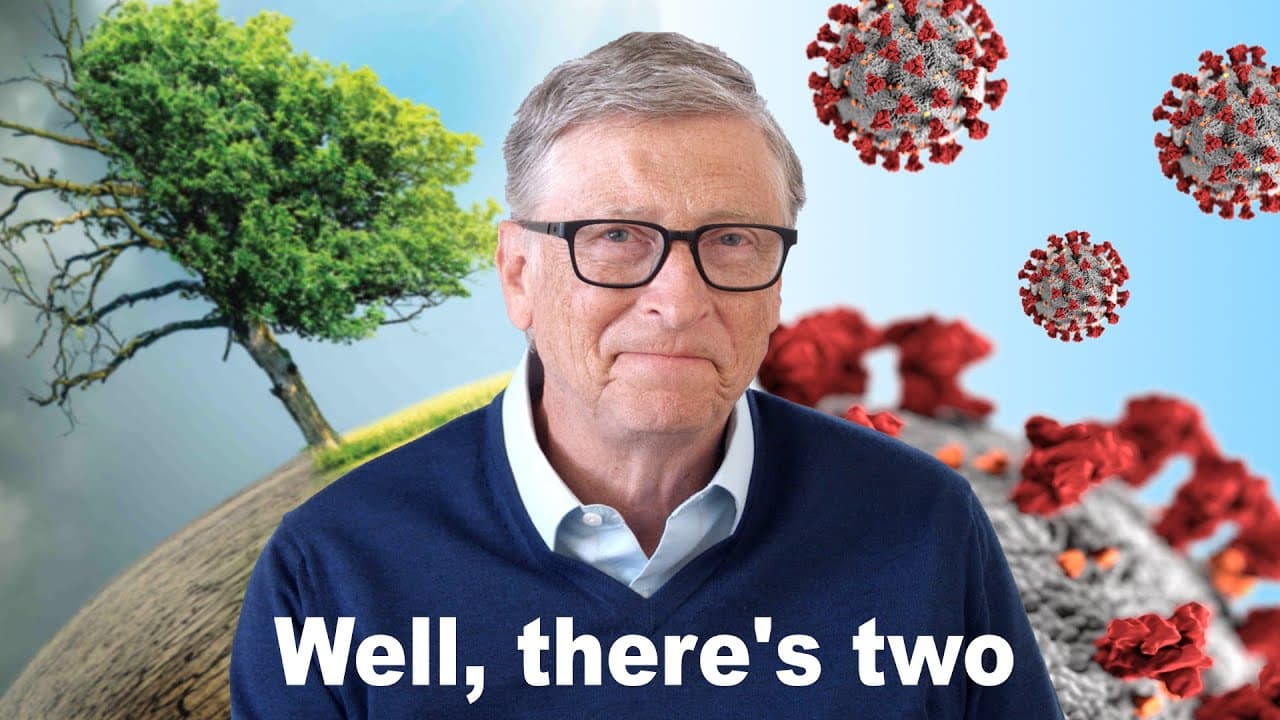
Bill Gates discusses the importance of pandemic preparedness, the risks of climate change and bioterrorism, and the challenges of misinformation in the age of the internet.
Transcript
Derek: So how did it feel to make this prediction and then have the world essentially not listen and not prepare? Bill Gates: Well there's no good feeling that comes on something like this saying i told you so If anything kills over 10 million people in the next few decades, it's most likely to be a highly infectious virus rather than a war. You kn... Read More
Key Insights
- 🫱 Highly infectious viruses pose a greater risk than wars in terms of potential fatalities.
- 🎁 Respiratory diseases present unique challenges, as infected individuals can spread the virus unknowingly.
- 💱 Climate change and bioterrorism are significant threats that require attention and preparation.
- ❓ Increased investment in prevention measures can significantly reduce the impact of pandemics.
- 💁 The internet has provided access to information, but there is a need for improved methods to curb the spread of misinformation.
- 🫨 Finding a balance in pushing back against misinformation is crucial, akin to a targeted immune system response.
- 🎮 Vaccine development requires stringent quality control and partnerships with capable manufacturers.
Install to Summarize YouTube Videos and Get Transcripts
Explore YouTube Video Summarizer or Get YouTube Transcript Extractor
Questions & Answers
Q: How did Bill Gates predict the COVID-19 pandemic?
Gates explains that his prediction was based on the existence of respiratory viruses and the fact that highly transmissive ones can cause significant fatalities. He also notes the unique challenges posed by respiratory diseases compared to others like Ebola.
Q: Why wasn't more done to prevent the pandemic if many people saw it coming?
Gates explains that due to the infrequency of pandemics, people often underestimate the risks and do not prioritize investment in prevention measures. He compares it to earthquakes or hurricanes, which are more common and result in more immediate actions.
Q: What are the risks beyond pandemics that we should be prepared for?
Gates identifies climate change as a significant threat, with potential death tolls surpassing even pandemics. He also highlights the risk of bioterrorism, where engineered viruses could be used as weapons.
Q: Can we prevent global pandemics in the future?
Gates believes that while there will always be pandemics, we can increase preparedness to prevent high death tolls. By improving our response systems and investing in research and development, we can minimize the impact.
Summary & Key Takeaways
-
Bill Gates emphasizes the need for more investment in systems to prevent and respond to epidemics, as highly infectious viruses pose a greater risk than wars.
-
He highlights the challenges of respiratory diseases, as infected individuals can spread the virus while still being asymptomatic, unlike diseases like Ebola.
-
Gates discusses the potential risks of climate change and bioterrorism as the next disaster we may not be adequately prepared for.
Read in Other Languages (beta)
Share This Summary 📚
Summarize YouTube Videos and Get Video Transcripts with 1-Click
Try YouTube Summary with ChatGPT & Claude or YouTube Transcript Generator
Explore More Summaries from Veritasium 📚




Summarize YouTube Videos and Get Video Transcripts with 1-Click
Try YouTube Summary with ChatGPT & Claude or YouTube Transcript Generator