A beginner's guide to quantum computing | Shohini Ghose
TL;DR
Quantum computing is a new technology that uses the principles of quantum physics, allowing particles to exist in superpositions, leading to advanced computational capabilities. This enables potential applications like unbreakable encryption, improved drug development, and information teleportation. Quantum computers can outperform traditional computers in specific tasks by utilizing the unique properties of quantum mechanics.
Transcript
Let's play a game. Imagine that you are in Las Vegas, in a casino, and you decide to play a game on one of the casino's computers, just like you might play solitaire or chess. The computer can make moves in the game, just like a human player. This is a coin game. It starts with a coin showing heads, and the computer will play first. It can choose t... Read More
Key Insights
- 💡 Quantum computers are a new kind of device that operates based on the principles of quantum physics, allowing for fluid combinations of zero and one, or heads and tails, resulting in powerful capabilities.
Install to Summarize YouTube Videos and Get Transcripts
Explore YouTube Video Summarizer or Get YouTube Transcript Extractor
Questions & Answers
Q: How does a regular computer simulate the outcome of a coin flip in the game?
A regular computer simulates the outcome of a coin flip by representing it as a bit, which can be a zero or a one. The computer uses a binary system to represent the heads or tails of the coin.
Q: How is a quantum computer different from a regular computer?
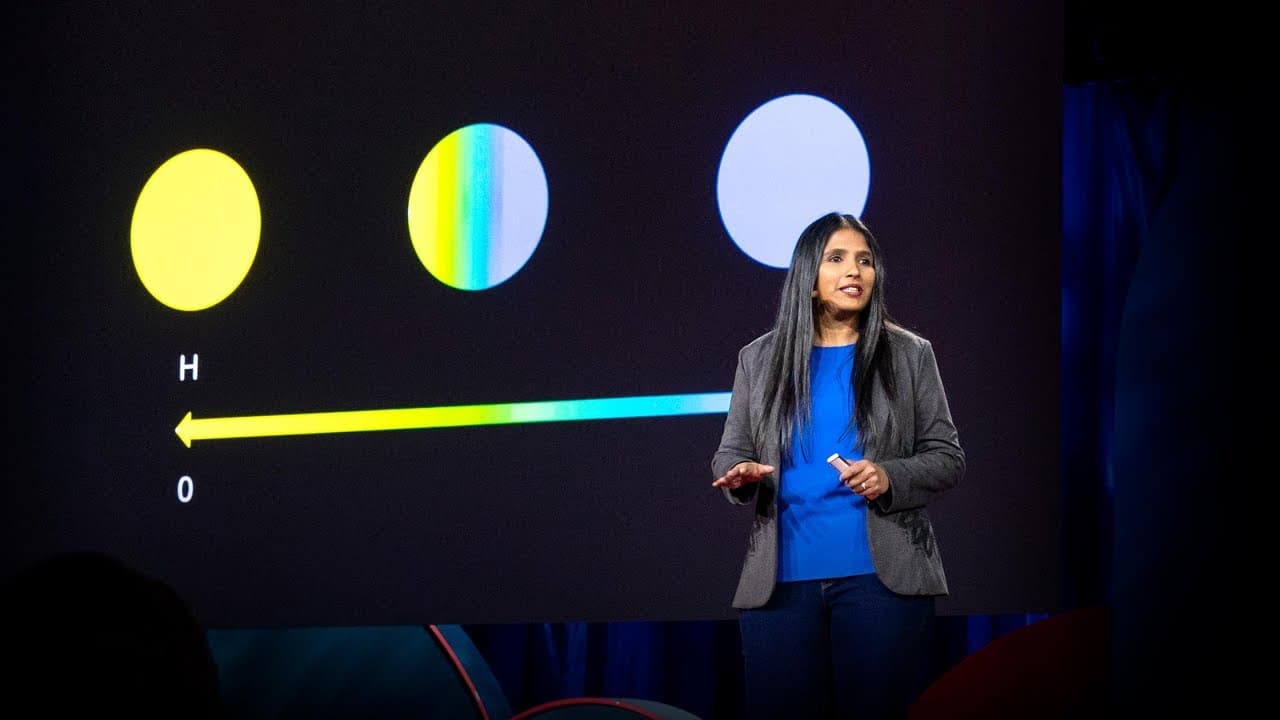
A quantum computer operates based on the principles of quantum physics, which allows it to manipulate particles like electrons and photons in a completely different way than a regular computer. It uses quantum bits, or qubits, which can exist in a superposition of both zero and one, rather than being strictly binary.
Q: How does a quantum computer achieve a winning streak in the coin game?
In the coin game played on a quantum computer, the computer creates a combination of both heads and tails, or zeros and ones, as a fluid superposition. This means that regardless of the player's move, the superposition remains intact. In the final move, the quantum computer can perfectly recover heads, ensuring its victory.
Q: What are some potential applications of quantum technologies?
Quantum technologies have the potential to impact various aspects of our lives. For example, they could be used to create unbreakable encryption keys, revolutionizing cybersecurity. Quantum simulations could greatly aid in drug development and lead to treatments for diseases like Alzheimer's. Additionally, the teleportation of information could be made possible through quantum entanglement, potentially paving the way for a quantum internet.
Summary
This video explores the concept of quantum computers and their potential impact on various aspects of our lives. Through a coin game played on a quantum computer, the speaker demonstrates how the principles of quantum physics, such as superposition and uncertainty, can be harnessed to achieve powerful outcomes. The video also highlights three potential applications of quantum technologies: unbreakable encryption, large-scale simulations for drug development, and teleportation of information. The speaker emphasizes the importance of treading carefully and responsibly as we continue to explore and build our quantum future.
Questions & Answers
Q: How does a quantum computer differ from a regular computer?
While a regular computer uses binary data represented as zeros and ones, a quantum computer utilizes quantum bits (qubits) that can exist in a superposition of both zero and one. This means a qubit can have a fluid, nonbinary identity with varying probabilities of being zero or one. Unlike regular computers, quantum computers operate based on the principles of quantum physics, offering new possibilities beyond traditional computing.
Q: How does the coin game demonstrate the power of quantum computers?
In the coin game, the quantum computer creates a superposition of heads and tails, allowing it to simultaneously consider both possibilities. This superposition remains intact regardless of the choices made by the players. In the final move, the quantum computer can "unmix" the superposition and always reveal heads, ensuring its victory. This demonstrates how quantum properties, such as superposition and uncertainty, can be harnessed to achieve favorable outcomes.
Q: How can quantum uncertainty be utilized for encryption?
Quantum uncertainty can be leveraged to create unbreakable encryption keys. The fluid identities of quantum particles make it impossible for hackers to secretly copy these keys precisely due to the uncertainties inherent in quantum systems. Breaking such encryption would require violating the laws of quantum physics. This holds great potential for enhancing security in various domains, such as banking and communication.
Q: How could quantum technologies revolutionize healthcare and medicine?
One example is the design and analysis of molecules for drug development. Describing and calculating the quantum properties of atoms in a molecule is computationally challenging for traditional computers. However, a quantum computer, operating on the same principles as the molecule being simulated, could provide more accurate results. This could lead to the discovery of new treatments for diseases like Alzheimer's, offering transformative possibilities in healthcare.
Q: What is teleportation of information, and how does it relate to quantum particles?
Teleportation of information involves transferring information from one location to another without physically transmitting it. Quantum particles can have entangled identities across space and time, meaning that altering one particle can instantaneously impact its entangled counterpart. This entanglement creates a channel for teleportation. Although a quantum internet does not exist yet, research labs have demonstrated this phenomenon. Simulating a quantum network on a quantum computer allows for the development of protocols for teleportation, data transmission, and secure voting.
Q: What is the speaker's perspective on quantum physics?
The speaker sees quantum physics as more than just a means to build quantum computers. They view quantum computers as tools that allow for the exploration of the mysteries of nature and the discovery of the hidden world outside our everyday experiences. The speaker expresses awe at how humanity, despite its limited access to the universe, can still uncover fascinating insights through imagination and ingenuity. The inherent uncertainty of the future is exciting and motivates further exploration in the field of quantum physics.
Takeaways
Quantum computers, operating on the principles of quantum physics, have the potential to revolutionize various aspects of our lives. Harnessing properties such as superposition and uncertainty, these computers can achieve outcomes that traditional computers cannot. Quantum technologies offer possibilities for unbreakable encryption, large-scale simulations for drug development, and teleportation of information. However, as we continue to delve into the quantum realm, it is crucial to approach its development responsibly. The exploration of quantum physics not only enables the creation of quantum computers but also provides glimpses into the mysteries of nature and the awe-inspiring complexity of the universe. The future remains uncertain, but this uncertainty is what makes further exploration in the field of quantum physics so exciting.
Summary & Key Takeaways
-
The speaker describes a coin game played on a regular computer and explains that a quantum computer operates differently based on the principles of quantum physics.
-
The speaker emphasizes that quantum computers have the potential to impact various aspects of society, such as security, healthcare, and the internet.
-
The speaker provides three examples of potential applications of quantum technologies: unbreakable encryption, drug development, and teleportation of information.
Read in Other Languages (beta)
Share This Summary 📚
Summarize YouTube Videos and Get Video Transcripts with 1-Click
Try YouTube Summary with ChatGPT & Claude or YouTube Transcript Generator
Explore More Summaries from TED 📚






Summarize YouTube Videos and Get Video Transcripts with 1-Click
Try YouTube Summary with ChatGPT & Claude or YouTube Transcript Generator