Drinking in ZERO-G! (and other challenges of a trip to Mars)
TL;DR
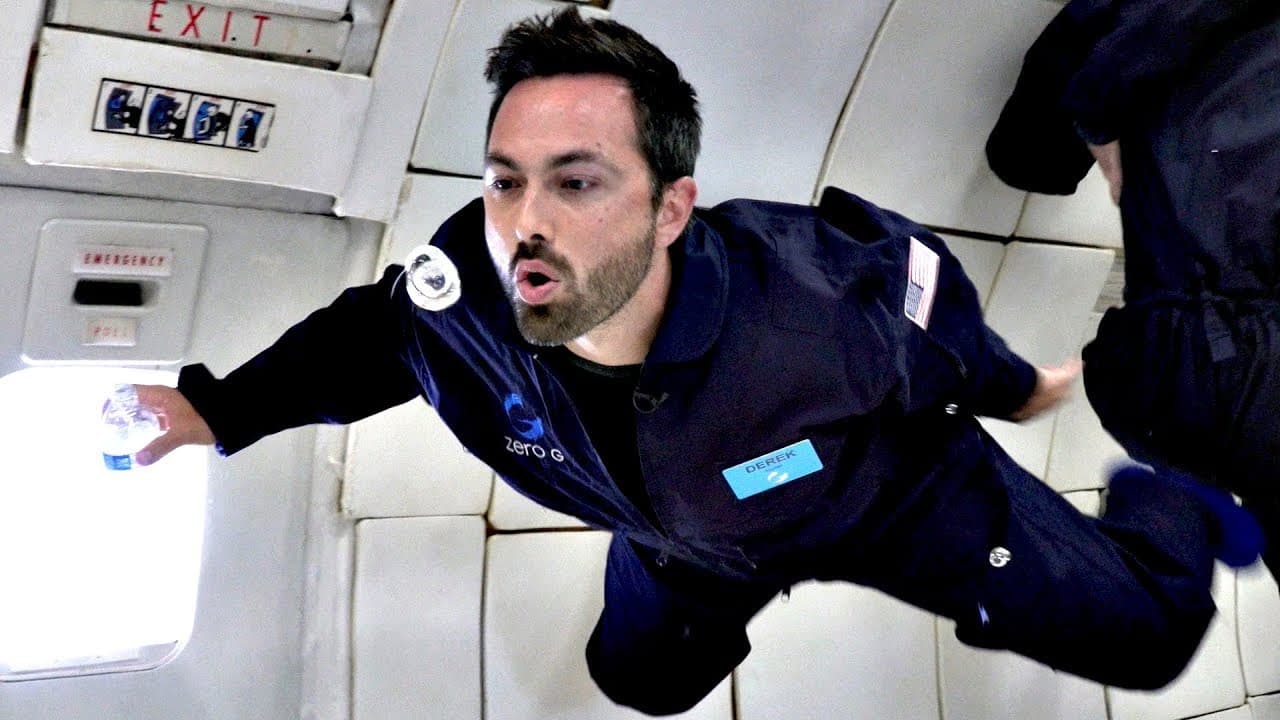
National Geographic sponsors a microgravity experience to provide a taste of what traveling to Mars would be like, including challenges with gravity, exercise, hygiene, and radiation.
Transcript
What would it be like to travel to Mars and be one of its first colonists? well to get a small taste National Geographic is sponsoring this video and sending me on a Microgravity experience - a vomit comet Come on this plane flies in a series of parabolic arcs so that if and everything inside can essentially be in freefall creating a microgravity e... Read More
Key Insights
- 👻 Gravity on Mars is only 37% of that on Earth, allowing for higher jumps and increased airtime.
- 👾 Low gravity in space leads to muscle and bone atrophy, with muscle mass decreasing by up to 20% on short space flights.
- ☠️ Lack of weight pushing on bones results in a significant decrease in bone density, over 10 times faster than on Earth.
- 💦 Daily activities like showering and brushing teeth become challenging in microgravity due to the surface tension of water.
- 👾 Level of exercise and resistance-training in space needs to be modified due to the absence of weight and gravity.
- 😚 Exposure to radiation is a significant challenge during space travel, leading to flashes of light when eyes are closed.
- 💦 Shielding from radiation can be achieved through insulation and using water as a radiation absorber in the spacecraft.
Install to Summarize YouTube Videos and Get Transcripts
Explore YouTube Video Summarizer or Get YouTube Transcript Extractor
Questions & Answers
Q: How does microgravity on Earth simulate the gravity on Mars?
Microgravity on Earth, experienced during parabolic arcs, is used to create a freefall environment similar to that on Mars, where gravity is only 37% of that on Earth.
Q: How does low gravity in space affect exercise routines?
In space, muscles weaken and shrink due to the lack of weight pushing on bones. Studies have shown that muscle mass can decrease by up to 20% on space flights lasting 5 to 11 days. Weightlifting becomes useless, so astronauts rely on elastic resistance for exercise.
Q: What are the effects of low gravity on bone density?
The lack of weight pushing on bones in space results in a decrease in bone density. Astronauts can lose one to two percent of bone mass per month, mostly in their lower extremities. This is over 10 times faster than the bone loss experienced through osteoporosis on Earth.
Q: What challenges arise with daily activities in microgravity?
Dealing with liquids becomes difficult in space due to the surface tension of water. Showering, brushing teeth, and going to the bathroom become much harder. Activities like washing your face can be challenging due to the absence of Earth's gravity.
Summary & Key Takeaways
-
National Geographic sponsors a microgravity experience to simulate the conditions of traveling to Mars.
-
Gravity on Mars is only 37% of that on Earth, allowing for higher jumps and increased airtime.
-
Low gravity in space can lead to muscle and bone mass loss, difficult exercise routines, and challenges with daily activities.
Read in Other Languages (beta)
Share This Summary 📚
Summarize YouTube Videos and Get Video Transcripts with 1-Click
Try YouTube Summary with ChatGPT & Claude or YouTube Transcript Generator
Explore More Summaries from Veritasium 📚



Summarize YouTube Videos and Get Video Transcripts with 1-Click
Try YouTube Summary with ChatGPT & Claude or YouTube Transcript Generator