How to Identify and Evaluate Startup Ideas Effectively

TL;DR
To find a successful startup idea, focus on solving real problems rather than trendy solutions. Evaluate your idea using a framework of key questions addressing aspects such as market size and competition. Remember, ideas that appear difficult or unexciting may offer valuable opportunities overlooked by others.
Transcript
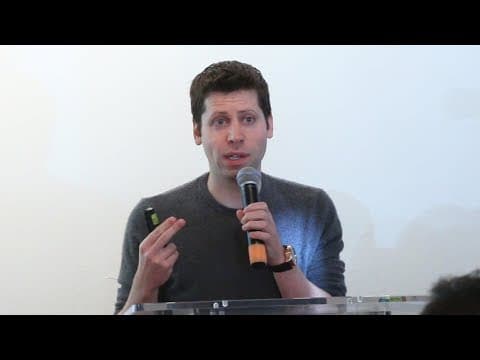
all right hello everyone I've got a lot of content to get through so I'm gonna move fast Buckle in if you are looking for a startup idea right now I'm going to try to help but more importantly I'm going to try to give you the conceptual tools to think about startup ideas in a sophisticated way the way that we think about them at YC here's the thing... Read More
Key Insights
- 🔎 Building a startup on an idea that doesn't solve a real problem is a common mistake. Founders often come up with superficially plausible problems that users don't really care about.
- 🌟 Falling in love with a problem and finding a high-quality problem is the best way to start a startup idea.
- 🔄 Tar pit ideas, which are common startup ideas that have been around for years, should be approached with caution. These ideas often seem easy to solve but have structural reasons that make them difficult or impossible.
- 🚀 Founders should avoid the extreme ends of the spectrum when it comes to choosing an idea. Jumping into the first idea without considering its business potential or waiting for the perfect idea are both mistakes.
- 💡 A framework of 10 key questions can help determine if a startup idea is good, including founder-market fit, market size, importance of the problem, competition, personal interest, recent changes, existing competitors, scalability, and long-term commitment.
- 🗝️ Ideas that seem bad initially, such as those that are hard to start, in a boring space, or have existing competitors, can actually be good opportunities. Many founders shy away from these ideas, leaving them for smarter founders to seize.
- 💡 Recipes for generating startup ideas include leveraging team expertise, solving personal problems, finding opportunities in recent changes, talking to people, exploring broken industries, and partnering with a co-founder who already has an idea.
- 🚀 Ultimately, the only way to know if a startup idea is good is to launch and iterate, as it's often challenging to determine its potential beforehand.
Install to Summarize YouTube Videos and Get Transcripts
Explore YouTube Video Summarizer or Get YouTube Transcript Extractor
Questions & Answers
Q: What is the most common mistake that founders make with startup ideas?
The most common mistake is building something that doesn't solve a real problem for users. It's crucial to ensure that the problem you're addressing is one that people genuinely care about and are willing to pay for a solution. Otherwise, your solution will not gain traction.
Q: How can founders determine if their idea has enough market demand?
Evaluating market demand is essential for startup success. Founders should consider the size of the market they plan to target and whether it is large enough, either currently or growing rapidly, to support a successful business. Additionally, they should assess the acuteness of the problem they aim to solve and whether potential customers truly need and desire a solution.
Q: Should founders be concerned if their startup idea has existing competitors?
Contrary to popular belief, having existing competitors can be a positive sign for a startup idea. It indicates that there is a validated market for the product or service. However, founders should strive to identify new insights or improvements that differentiate their offering from existing solutions. This helps them provide unique value to customers and carve out a niche within the competitive landscape.
Q: Is it better to start with an idea in a high-growth market or a large established market?
Both high-growth and large established markets can offer opportunities for startup success. High-growth markets tend to have more potential for scaling quickly and capturing a significant share. On the other hand, large established markets often provide stability and a customer base ready for disruption. The choice depends on the founder's preference and their ability to navigate the specific dynamics of each market.
Q: How can founders leverage their personal expertise to identify startup ideas?
Personal expertise can be a valuable asset in generating startup ideas. Founders should consider the industries, domains, or problems they have deep knowledge or experience in. By combining their expertise with entrepreneurial thinking, they can uncover problems, inefficiencies, or unmet needs within their field and develop innovative solutions. This approach also helps establish founder-market fit, increasing the likelihood of success.
Q: What role does the execution of the startup idea play in its success?
While having a promising startup idea is important, the execution is equally crucial. Even the best idea can fail if not executed properly. Success ultimately depends on how well the team builds, markets, and scales the product or service. As the speaker highlights, the initial idea will likely evolve and morph over time, so the focus should be on starting with an idea that has potential and being adaptable in response to market feedback and opportunities.
Q: How can founders overcome the fear of starting with their initial startup idea?
Founders often face two extremes when it comes to starting a company: either jumping into the first idea that comes to mind without evaluating its viability or waiting for the perfect idea, which may never come. The speaker advises finding a middle ground. Think of the initial idea as a starting point, knowing that it will likely evolve. The goal is to have an idea with enough interesting qualities to pivot or iterate in the right direction as insights and feedback emerge.
Q: Can founders find startup ideas by examining recent changes in the world?
Yes, recent changes in technology, regulations, or societal trends can create new opportunities for startups. For example, advancements in AI or the impact of the COVID-19 pandemic have opened up possibilities for innovative solutions. By identifying and understanding these changes, founders can spot emerging problems or untapped markets that need addressing. This can lead to the development of novel startup ideas that capitalize on these shifts.
Summary & Key Takeaways
-
The speaker discusses common mistakes with startup ideas, such as building a solution without a real problem or getting stuck on unviable ideas.
-
They emphasize the importance of starting with a high-quality problem and falling in love with it, rather than focusing on trendy technologies.
-
The talk provides a framework of 10 key questions to evaluate startup ideas, covering aspects like founder market fit, market size, problem acuteness, competition, and scalability.
Read in Other Languages (beta)
Share This Summary 📚
Summarize YouTube Videos and Get Video Transcripts with 1-Click
Try YouTube Summary with ChatGPT & Claude or YouTube Transcript Generator
Explore More Summaries from Y Combinator 📚





Summarize YouTube Videos and Get Video Transcripts with 1-Click
Try YouTube Summary with ChatGPT & Claude or YouTube Transcript Generator