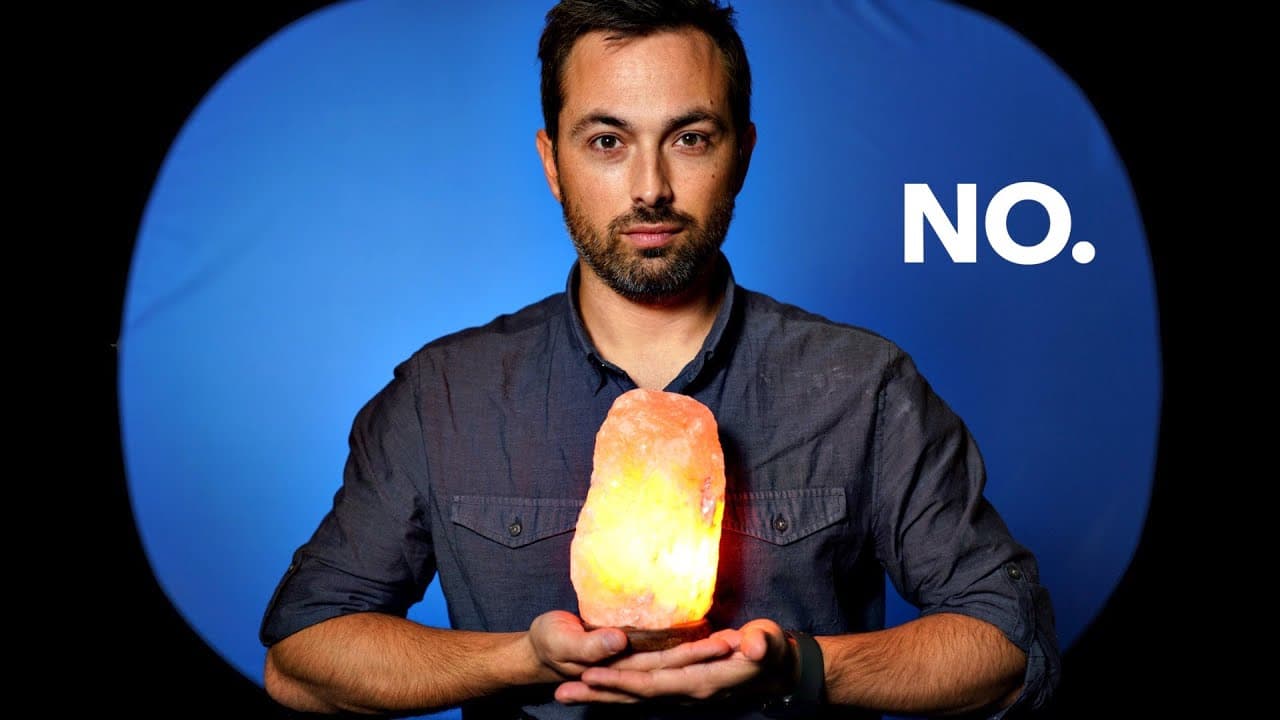
Do Salt Lamps Work?
TL;DR
Negative ions have been studied for their potential positive effects on human health and mood, with some research suggesting they can improve mood, increase energy levels, and enhance cognitive function. However, the evidence is inconsistent and the biological plausibility of these effects is questionable.
Transcript
Part of this video was sponsored by LastPass. Stick around to the end for a word from our sponsor. Are negative ions good for you? Normally I'd dismiss such a question out of hand. In fact that's exactly what I did when a friend brought it up about a month ago. But he was insistent he said no this is for real there's science behind it. And so I loo... Read More
Key Insights
- 😑 Negative ions have been studied for their potential effects on human health and mood for nearly a century.
- 🌊 Natural sources of negative ions include cosmic rays, thunderstorms, waterfalls, and ocean waves.
- 😑 Research suggests that negative ions may improve mood, increase energy levels, and enhance cognitive function.
- 😑 However, the evidence on the effects of negative ions is inconsistent, and the biological plausibility of these effects is questionable.
- 😑 Artificial devices like salt lamps and ionic air purifiers may not effectively generate negative ions.
- 😒 The use of ionic air purifiers may increase ozone levels, which can be harmful to health.
- 💨 Exercise and spending time outdoors are proven ways to improve mood and well-being.
Install to Summarize YouTube Videos and Get Transcripts
Explore YouTube Video Summarizer or Get YouTube Transcript Extractor
Questions & Answers
Q: Do negative ions have any biological effects on humans?
The research on the effects of negative ions on human health is inconsistent. Some studies suggest positive effects on mood and cognitive function, while others find no significant difference. The biological plausibility of these effects is also questionable.
Q: What are some natural sources of negative ions?
Natural sources of negative ions include cosmic rays, thunderstorms, waterfalls, and ocean waves. These sources generate ions in the atmosphere, which are believed to have positive effects on mood and well-being.
Q: Can salt lamps effectively generate negative ions?
Salt lamps are believed to release negative ions into the air. However, scientific testing has shown that these lamps may not effectively generate negative ions. The crystal structure of salt does not allow for the production of ions through the liberation of chloride ions.
Q: Are artificial devices like ionic air purifiers effective in generating negative ions?
Ionic air purifiers can generate negative ions by using high voltage to ionize the air. These devices may produce negative ions, but they also generate ozone, which can be harmful in high concentrations. Therefore, the use of such devices should be approached with caution.
Summary & Key Takeaways
-
There is a body of research on the biological effects of negative ions, which has been studied for nearly a century.
-
Negative ions are believed to have a positive impact on mood and well-being, while positive ions may increase anxiety and excitement.
-
Natural sources of negative ions include cosmic rays, thunderstorms, waterfalls, and ocean waves, while artificial devices like salt lamps and air purifiers may not effectively generate negative ions.
Read in Other Languages (beta)
Share This Summary 📚
Summarize YouTube Videos and Get Video Transcripts with 1-Click
Try YouTube Summary with ChatGPT & Claude or YouTube Transcript Generator
Explore More Summaries from Veritasium 📚



Summarize YouTube Videos and Get Video Transcripts with 1-Click
Try YouTube Summary with ChatGPT & Claude or YouTube Transcript Generator