How Has Technology Changed Bowling Techniques?
TL;DR
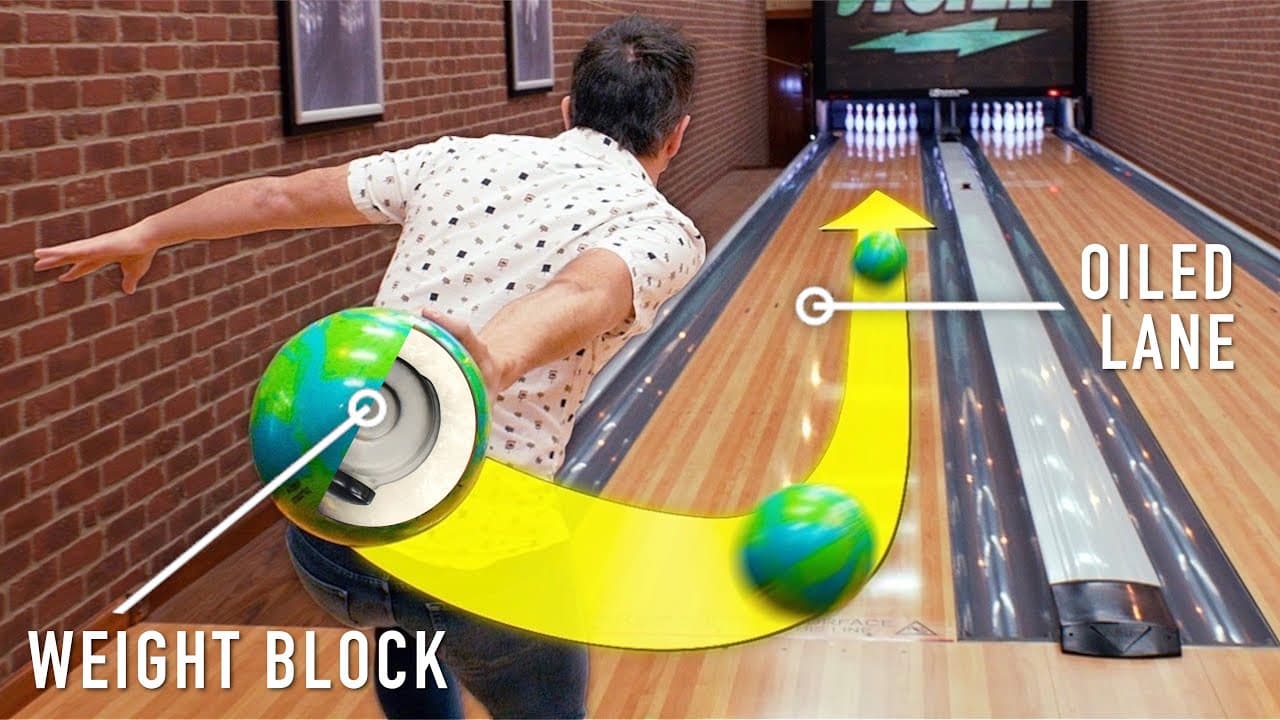
Technology has revolutionized bowling by introducing advanced ball designs like asymmetric weight blocks and specialized oil patterns on lanes, greatly influencing ball motion and increasing strike probabilities. Modern bowling balls enable players to hook the ball more effectively while various oil patterns require bowlers to adjust their techniques for optimal performance, leading to higher average scores and more perfect games.
Transcript
A portion of this video was sponsored by Salesforce. This is the biggest, most in-depth video about bowling ever. How bowling balls are made, the best way to throw them, maximize strikes, how the lanes are oiled, what it takes to be a pro and how this sport has continually been reinvented for literally thousands of years, up to the present day. (bo... Read More
Key Insights
- 💬 Bowling balls contain weight blocks and cores, with asymmetrical designs affecting ball movement.
- 💬 The process of manufacturing a bowling ball involves creating the weight block and adding cover stock material around it.
- ✈️ Lane oiling is essential for protecting the lanes and influencing ball behavior.
- 💬 The use of different ball surfaces can significantly impact ball motion.
- 💯 Asymmetric cores and varying ball surfaces have contributed to improvements in average scores and the number of perfect games.
- 💬 The science behind throwing the ball involves considering factors such as oil patterns, weight block placement, and surface characteristics.
- 💬 Precision and technique are crucial in achieving the desired ball motion and maximizing strikes.
Install to Summarize YouTube Videos and Get Transcripts
Explore YouTube Video Summarizer or Get YouTube Transcript Extractor
Questions & Answers
Q: What is inside a bowling ball?
Bowling balls have weight blocks at their core, which can be asymmetrical and affect the ball's movement. The core is made of lightweight glass beads, with a higher density in the weight block than the core material.
Q: How are bowling balls manufactured?
Bowling balls are created by starting in the center and building the weight block. Various tanks filled with material are used to pour the cover stock around the core, which is then heated and shaped into a ball. The final step involves trimming and smoothing the ball.
Q: Why is oil applied to bowling lanes?
Oil is applied to bowling lanes to protect the surface from damage caused by the balls. However, it also affects ball motion by reducing friction, allowing the ball to skid and hook correctly. Different oil patterns can be applied to manipulate ball behavior.
Q: What is the significance of the surface of a bowling ball?
The surface of a bowling ball plays a crucial role in ball motion. Rougher finishes provide more traction in the oil, causing the ball to hook earlier. Smoother finishes help prevent excessive hooking on shorter oil patterns.
Summary & Key Takeaways
-
Bowling balls are not perfect solid spheres; they contain weight blocks, typically asymmetrical, that affect their movement.
-
The core of a bowling ball is made of lightweight glass beads, with a higher density in the weight block compared to the core material.
-
Bowling lanes are typically made synthetically with melamine resin, and the oil patterns on the lanes greatly impact ball motion.
Read in Other Languages (beta)
Share This Summary 📚
Summarize YouTube Videos and Get Video Transcripts with 1-Click
Try YouTube Summary with ChatGPT & Claude or YouTube Transcript Generator
Explore More Summaries from Veritasium 📚





Summarize YouTube Videos and Get Video Transcripts with 1-Click
Try YouTube Summary with ChatGPT & Claude or YouTube Transcript Generator