I Rented A Helicopter To Settle A Physics Debate
TL;DR
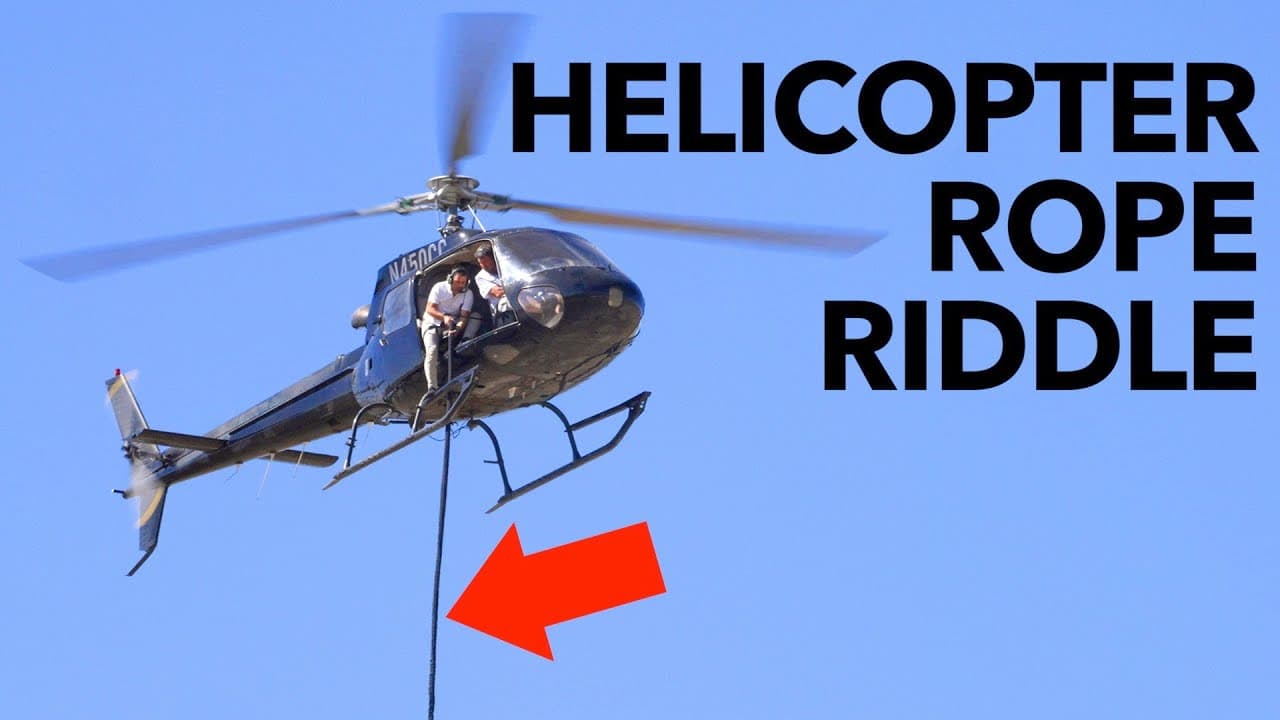
A helicopter flying at a constant speed affects the shape of a hanging cable, and the correct answer to the physics question is option B.
Transcript
In 2014, the qualifying exam for the US Physics Team had this as question 19: A helicopter is flying horizontally at constant speed. A perfectly flexible uniform cable is suspended beneath the helicopter. Air friction on the cable is not negligible. So, which of the following diagrams best shows the shape of the cable as the helicopter flies throug... Read More
Key Insights
- 👱 The shape of a cable hanging beneath a helicopter is influenced by air friction, weight, and drag.
- 🫤 At a constant speed, the cable forms a diagonal shape to the left.
- 🗾 Adding additional weight to the cable results in an inverted J shape, while adding objects with drag can create a straight or J shape.
- 🚠 The controversy surrounding the cable's shape stems from different interpretations and homemade experiments.
- 🥳 The tension in the cable changes throughout its length, but the direction remains the same due to the constant ratio of air resistance to weight.
- 🚁 The rotor wash of the helicopter does not significantly affect the shape of the cable.
Install to Summarize YouTube Videos and Get Transcripts
Explore YouTube Video Summarizer or Get YouTube Transcript Extractor
Questions & Answers
Q: What is the controversy surrounding the shape of a cable hanging beneath a helicopter?
Different interpretations have led to debates about the correct shape of the cable as the helicopter flies, with options ranging from hanging straight down to a diagonal or J shape.
Q: Which shape did the majority of people choose when polled on YouTube?
The most common answer chosen by viewers was option C, which suggests a hook shape for the cable.
Q: How did the experiments conducted in the video help determine the correct answer?
By observing the shape of the cable with different added weights and objects, it was concluded that the correct answer is option B, which shows a cable hanging diagonally to the left.
Q: What happens to the cable's shape when a flag or parachute is added to the end?
The added drag from a flag or parachute causes the cable to straighten or form a J shape, depending on the object's weight and drag.
Summary & Key Takeaways
-
A helicopter flying with a hanging cable experiences air friction on the cable, leading to debates about the cable's shape.
-
Based on experiments, the cable hangs diagonally to the left when the helicopter flies at a constant speed.
-
Adding a weight to the cable makes it form an inverted J shape, while adding a parachute or flag changes the shape to a straight or J shape.
Read in Other Languages (beta)
Share This Summary 📚
Summarize YouTube Videos and Get Video Transcripts with 1-Click
Try YouTube Summary with ChatGPT & Claude or YouTube Transcript Generator
Explore More Summaries from Veritasium 📚


Summarize YouTube Videos and Get Video Transcripts with 1-Click
Try YouTube Summary with ChatGPT & Claude or YouTube Transcript Generator