The Genius of 3D Printed Rockets
TL;DR
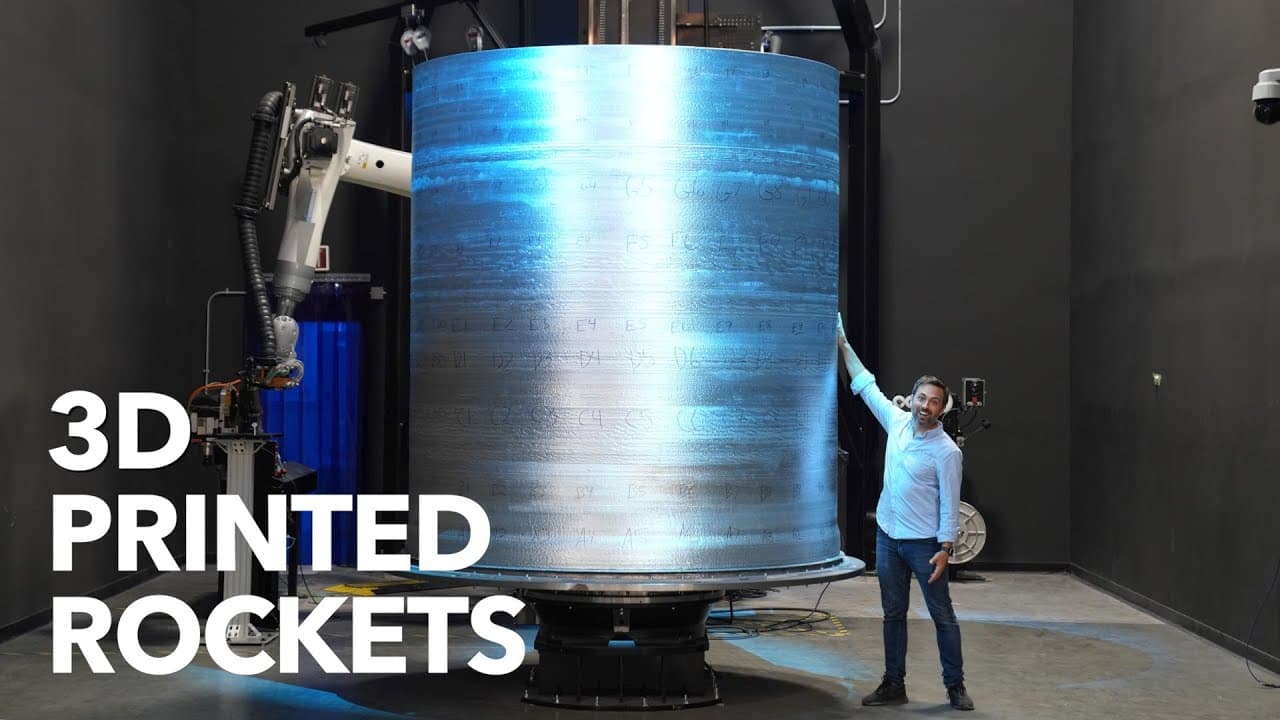
Relativity Space, a startup, has built the world's largest 3D metal printer to print rockets in just 60 days, revolutionizing the traditional manufacturing process.
Transcript
- This is the world's largest 3D metal printer. It was built by Relativity Space, a startup that aims to print an entire rocket, including fuel tanks and rocket engines, in just 60 days. I'm like looking inside a 3D printed rocket that is actually gonna go to space. This giant hunk of metal, it's unbelievable. This video is sponsored by Omaze. Offe... Read More
Key Insights
- 🖨️ Relativity Space aims to print rockets using their 3D metal printer, revolutionizing the traditional manufacturing process.
- 🫠 The 3D printing process involves melting aluminum alloy wire using lasers and plasma arc discharge.
- 👻 3D printing reduces costs, enables rapid iteration and design improvements, and allows for the construction of lightweight and complex structures.
- 🥳 Traditional rocket manufacturing requires extensive tooling and labor-intensive processes, whereas 3D printing eliminates the need for fixed tooling and reduces the number of parts.
- 🚀 The 3D printing approach offers opportunities for increased automation and can potentially transform the appearance and functionality of rockets.
- 🍉 Relativity Space's long-term vision includes building an industrial base on Mars using 3D printing technology.
Install to Summarize YouTube Videos and Get Transcripts
Explore YouTube Video Summarizer or Get YouTube Transcript Extractor
Questions & Answers
Q: How does 3D printing technology make rocket manufacturing more efficient?
3D printing reduces the number of parts required and allows for rapid iteration, resulting in faster production times and cost savings. It also enables the creation of complex designs that were previously impractical or impossible with traditional manufacturing techniques.
Q: How does the 3D printing process work for rocket manufacturing?
Relativity Space uses a 3D metal printer that utilizes lasers and plasma arc discharge to melt aluminum alloy wire and create the rocket structure one tiny bit at a time. The printer can print at a speed of approximately 10 inches per second.
Q: What are the benefits of 3D printing for rocket manufacturing?
3D printing reduces costs, allows for rapid iteration and design improvements, and enables the construction of lightweight and complex structures. It also minimizes the need for custom tooling and can produce parts with superior material properties.
Q: Why is 3D printing technology important for space exploration?
3D printing technology has the potential to revolutionize space exploration by enabling faster and more cost-effective rocket manufacturing. It also allows for the construction of innovative and optimized designs that can enhance performance and efficiency in space missions.
Summary & Key Takeaways
-
Relativity Space aims to print an entire rocket, including fuel tanks and rocket engines, using their 3D metal printer.
-
The printer utilizes lasers and plasma arc discharge to melt aluminum alloy wire and create a rocket structure one tiny bit at a time.
-
3D printing allows for rapid iteration, reduces the number of parts, and enables the construction of complex designs that are impractical or impossible with traditional manufacturing techniques.
Read in Other Languages (beta)
Share This Summary 📚
Summarize YouTube Videos and Get Video Transcripts with 1-Click
Try YouTube Summary with ChatGPT & Claude or YouTube Transcript Generator
Explore More Summaries from Veritasium 📚




Summarize YouTube Videos and Get Video Transcripts with 1-Click
Try YouTube Summary with ChatGPT & Claude or YouTube Transcript Generator