Hydrodynamic Levitation!
TL;DR
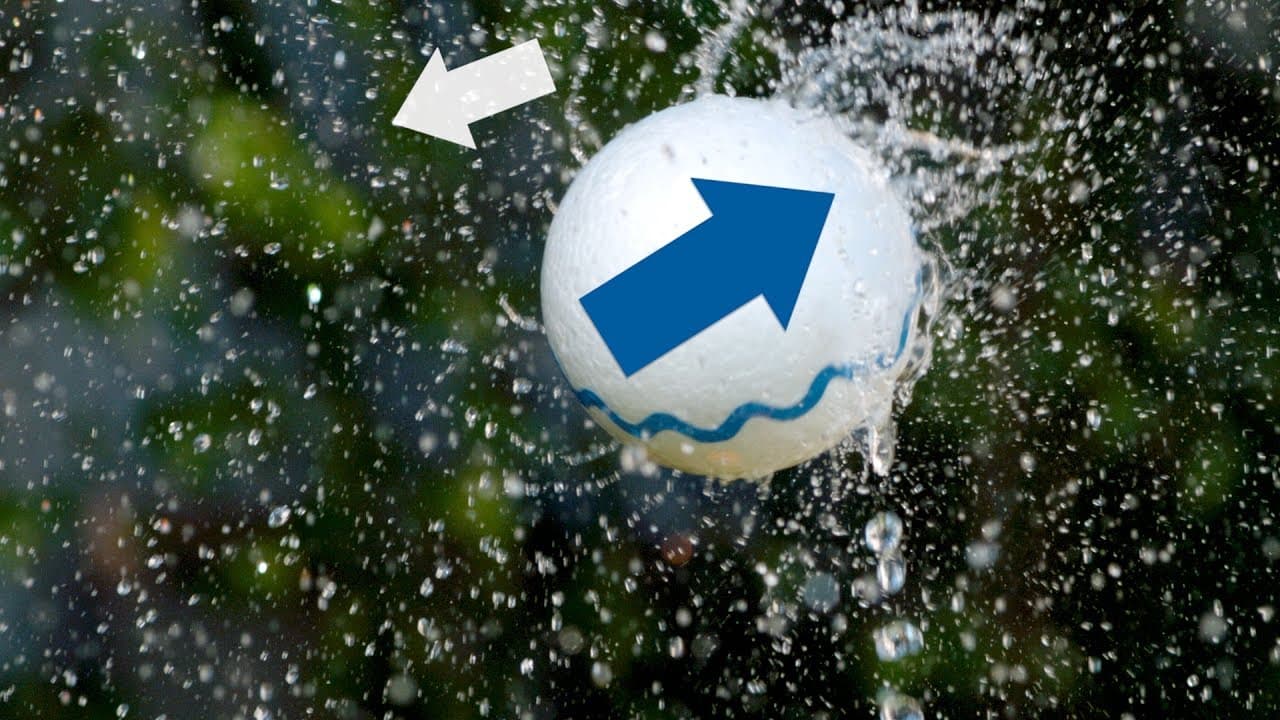
Water streams can levitate styrofoam balls through hydrodynamic levitation, using Bernoulli's principle and rotation for stability.
Transcript
Check this out Hahaha, isn't that awesome? That is hydrodynamic levitation Check it out! This styrofoam ball is levitating on this stream of water And it's doing so in a very stable way. The set up it's so stable you can play Frisbee through it Which is weird to me because the water is off to one side of the ball And that doesn't seem to make any s... Read More
Key Insights
- 💦 Hydrodynamic levitation relies on laminar flow and Bernoulli's principle to create stable levitation of styrofoam balls on water streams.
- 💬 Larger styrofoam balls can be levitated by generating a spiral of water, which creates forces to keep the ball in the stream.
- 🤽 Adhesion between the water and the styrofoam plays a role in pulling the water over the ball and allowing it to spin.
- 📐 Rotation provides additional stability to the levitation by adding angular momentum.
- 🕴️ Levitating discs require more precision to maintain their vertical orientation in the stream.
- 👪 Hydrodynamic levitation experiments can be recreated at home with readily available materials.
- 🦮 The YouTube channel Innovinci offers a guide for building the setup in your own backyard.
Install to Summarize YouTube Videos and Get Transcripts
Explore YouTube Video Summarizer or Get YouTube Transcript Extractor
Questions & Answers
Q: How does hydrodynamic levitation work?
Hydrodynamic levitation works through laminar flow and Bernoulli's principle. The water stream surrounds the styrofoam ball, and if the ball moves to one side, it slows down the fluid flow, increasing the pressure and pushing the ball back into the middle.
Q: What makes larger styrofoam balls levitate?
Larger styrofoam balls can be levitated by creating a spiral of water around the ball. This spiral generates forces that keep the ball in the stream. Adhesion between the water and the styrofoam helps to pull the water over the ball, allowing it to spin and maintaining stability.
Q: How does rotation affect the levitation of styrofoam balls?
Rotation provides angular momentum, adding stability to the levitation. While not as crucial for smaller balls, it is vital for levitating discs since they need to maintain their vertical orientation for the levitation to work properly.
Q: Can hydrodynamic levitation be recreated at home?
Yes, hydrodynamic levitation experiments can be recreated at home with a simple run to Home Depot. The YouTube channel Innovinci provides a video guide on building the setup in your own backyard.
Summary & Key Takeaways
-
Hydrodynamic levitation allows styrofoam balls to levitate on streams of water, even when the water is off to one side of the ball.
-
The levitation is achieved through laminar flow and Bernoulli's principle, which causes the pressure to increase on the opposite side of the ball, pushing it back into the stream.
-
Larger styrofoam balls can also be levitated by generating a spiral of water around the ball, creating forces that keep it in the stream.
Read in Other Languages (beta)
Share This Summary 📚
Summarize YouTube Videos and Get Video Transcripts with 1-Click
Try YouTube Summary with ChatGPT & Claude or YouTube Transcript Generator
Explore More Summaries from Veritasium 📚



Summarize YouTube Videos and Get Video Transcripts with 1-Click
Try YouTube Summary with ChatGPT & Claude or YouTube Transcript Generator