What Is Poisson's Spot and Where Is It Found?
TL;DR
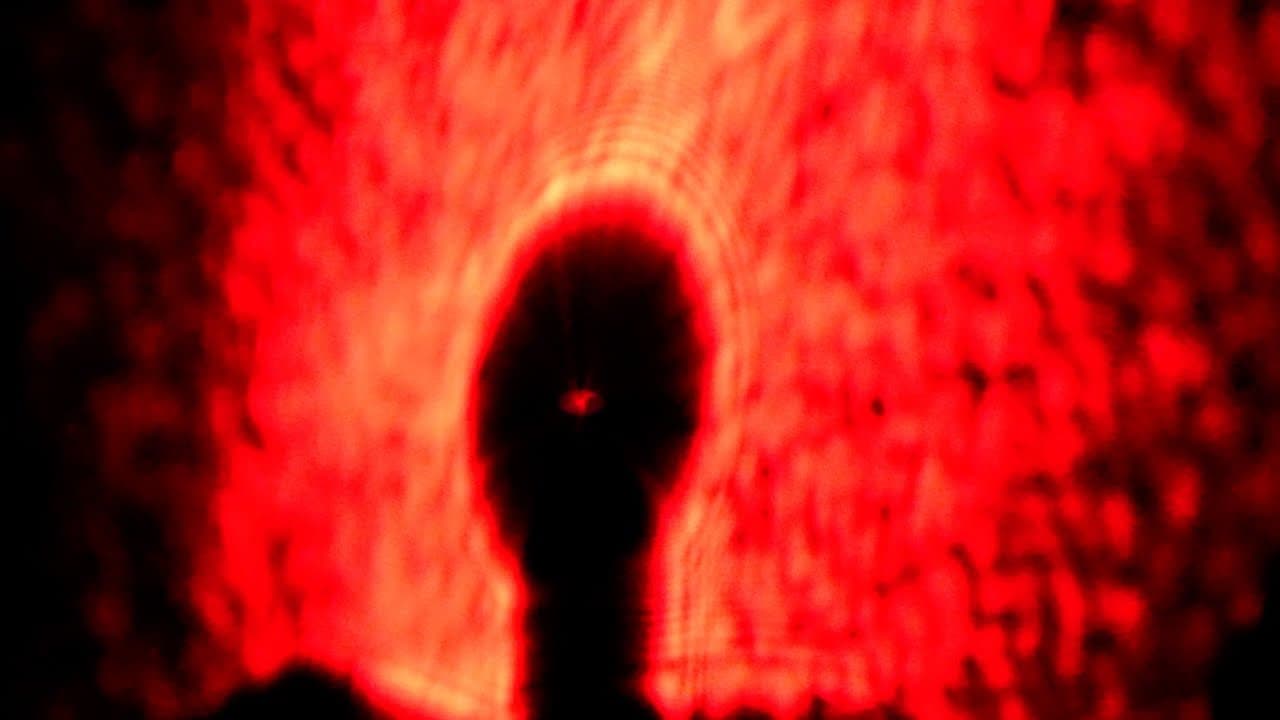
Poisson's spot, the brightest part of a shadow, is located in the center of a shadow cast by a circular or spherical object. This phenomenon occurs due to the constructive interference of light waves that diffract around the edges of the object, creating a bright spot in the middle of the shadow.
Transcript
Where is the darkest part of a shadow? I mean the obvious answer seems to be, right in the middle. If you look closely at a shadow, as you move the object away from the wall, you notice that the shadow gets a bit fuzzy. So clearly, the edges are lighter. Now, we know that light bends around corners, that's a phenomenon call "diffraction". So, is it... Read More
Key Insights
- 🙂 Shadows have fuzzy edges due to imperfect point light sources.
- 🙂 Diffraction was a subject of debate between wave and particle theories of light.
- 😓 Poisson's spot, the brightest part of a shadow, exists in the middle of the shadow cast by circular objects.
Install to Summarize YouTube Videos and Get Transcripts
Explore YouTube Video Summarizer or Get YouTube Transcript Extractor
Questions & Answers
Q: What causes the fuzzy edges in shadows?
Shadows have fuzzy edges because most light sources like the sun are not perfectly point objects, resulting in light from different angles and creating the fuzziness.
Q: What was the debate about diffraction 200 years ago?
The debate was about the nature of light, with Augustine Fresnel proposing that light is a wave phenomenon and Simeon Poisson favoring Newton's idea of light as particles.
Q: Did the experiments confirm the existence of Poisson's spot?
Yes, experiments with circular obstacles and various light sources, including lasers, confirmed the existence of a bright spot in the middle of a shadow.
Q: Can Poisson's spot be seen in everyday life?
Poisson's spot is not visible in everyday life due to most objects not being perfect circles, surface roughness, and incoherent light sources. However, it can be observed in the shadow cast by floaters in the eye.
Summary & Key Takeaways
-
Shadows have fuzzy edges because light sources are not perfectly point objects, causing light from different angles to create the fuzziness.
-
Diffraction was the cause of a debate about 200 years ago, with Augustine Fresnel suggesting light as a wave phenomenon and Simeon Poisson criticizing the idea.
-
To test Poisson's spot, experiments were conducted with circular obstacles and light sources, ultimately confirming the existence of the bright spot in the middle of a shadow.
Read in Other Languages (beta)
Share This Summary 📚
Summarize YouTube Videos and Get Video Transcripts with 1-Click
Try YouTube Summary with ChatGPT & Claude or YouTube Transcript Generator
Explore More Summaries from Veritasium 📚




Summarize YouTube Videos and Get Video Transcripts with 1-Click
Try YouTube Summary with ChatGPT & Claude or YouTube Transcript Generator