What Is the Science Behind Fireworks and How Are They Made?
TL;DR
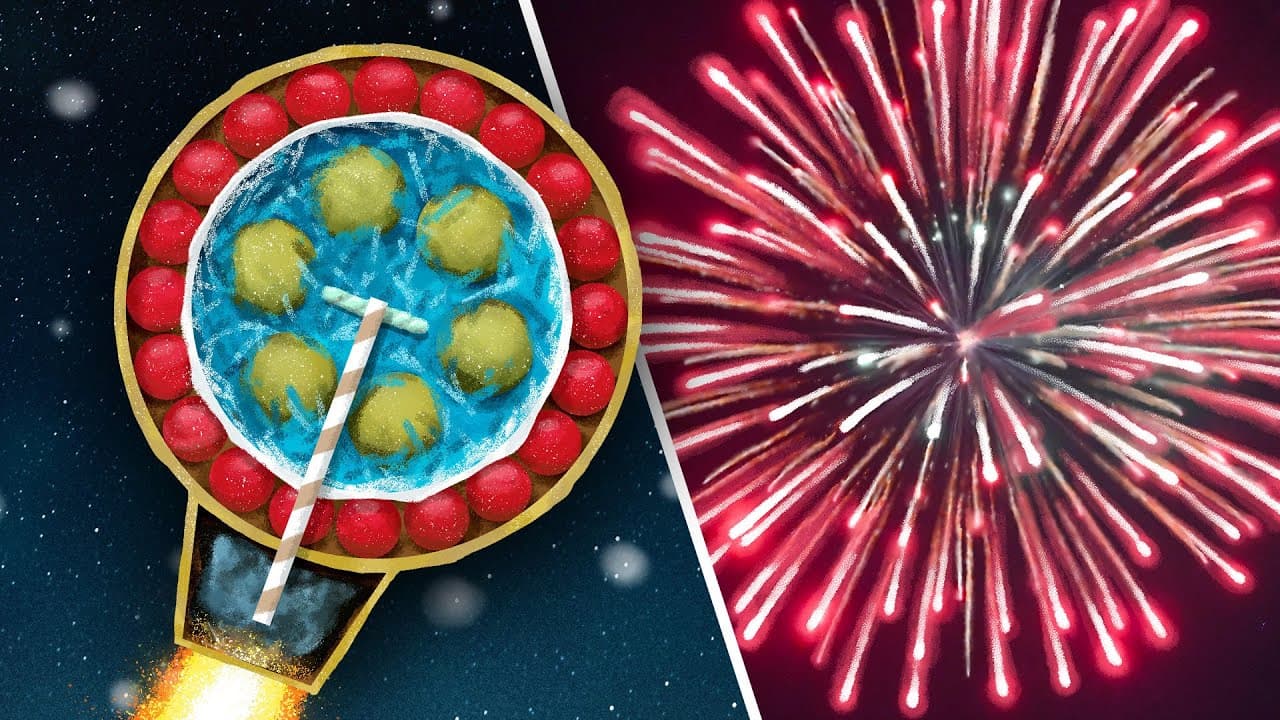
Fireworks are created using gunpowder, which consists of potassium nitrate, sulfur, and charcoal. The combustion of these ingredients produces heat, which ignites various chemicals that generate distinct colors through electron energy transitions. The assembly and arrangement of these elements within shells create the spectacular visual effects we see during displays.
Transcript
- This is the biggest... hottest... and most explosive- - Oh my god. - Video on fireworks ever, covering everything from the invention of gunpowder to how fire can burn underwater, how fireworks are made, the colors, shapes, fuses. To how they're launched. We'll even see what it's like to fly through fireworks. (fireworks popping) Mr. Beast has got... Read More
Key Insights
- 😨 The invention of gunpowder and the development of fireworks originated in ancient China, where people sought to scare off evil spirits.
- ❓ Gunpowder consists of three main ingredients: potassium nitrate, sulfur, and charcoal, which provide the necessary elements for combustion.
- 🤩 Fireworks production involves constructing shells, coating stars with different chemicals, and utilizing fuses to ignite the explosion.
- 😒 Different chemicals and compounds create specific colors in fireworks through the use of quantum mechanics and electron energy transitions.
- 🤩 The construction and arrangement of stars inside a firework shell determine the patterns and effects observed in the sky.
- 😕 Fuses play a crucial role in both igniting fireworks and providing time delays for synchronized displays.
- 🎆 Fireworks displays require rigorous safety measures to protect both pyrotechnicians and spectators, as malfunctions can occur.
Install to Summarize YouTube Videos and Get Transcripts
Explore YouTube Video Summarizer or Get YouTube Transcript Extractor
Questions & Answers
Q: How were fireworks invented?
Fireworks have a long history, with the earliest recorded instances in ancient China. People would throw bamboo tubes into fires and eventually added black powder to create more impressive bangs, which they believed scared off evil spirits.
Q: What are the key ingredients in gunpowder?
Gunpowder, or black powder, consists of three main ingredients: potassium nitrate (nitre), sulfur, and charcoal. The potassium nitrate provides oxygen, the charcoal acts as fuel, and the sulfur acts as kindling.
Q: How do different chemicals create different colors in fireworks?
The vibrant colors in fireworks are created through specific chemical compounds. For example, copper ions produce a blue color, while barium chloride creates green, and calcium chloride produces orange. The transition of electrons between energy levels determines the color emitted.
Q: How are fireworks launched into the sky?
Fireworks are launched using mortars, which are large plastic tubes. A lift charge of black powder propels the firework into the air, depending on the size of the shell. The pyrotechnician uses different amounts of black powder to ensure the shell reaches the desired height.
Q: Are fireworks dangerous?
Fireworks can be dangerous if mishandled. Professionals follow strict safety protocols and use materials that reduce the risk of explosions. However, malfunctions can occur, which is why exclusion zones are established to protect spectators.
Key Insights:
- The invention of gunpowder and the development of fireworks originated in ancient China, where people sought to scare off evil spirits.
- Gunpowder consists of three main ingredients: potassium nitrate, sulfur, and charcoal, which provide the necessary elements for combustion.
- Fireworks production involves constructing shells, coating stars with different chemicals, and utilizing fuses to ignite the explosion.
- Different chemicals and compounds create specific colors in fireworks through the use of quantum mechanics and electron energy transitions.
- The construction and arrangement of stars inside a firework shell determine the patterns and effects observed in the sky.
- Fuses play a crucial role in both igniting fireworks and providing time delays for synchronized displays.
- Fireworks displays require rigorous safety measures to protect both pyrotechnicians and spectators, as malfunctions can occur.
- FPV drone flights through fireworks displays offer a unique and thrilling perspective, capturing the beauty of the explosions from within.
Summary & Key Takeaways
-
The video begins by discussing the history of fireworks, starting with the earliest recorded instances in ancient China and the development of gunpowder.
-
The host conducts experiments to demonstrate the components of gunpowder and how it burns. He also explores the different fuel, oxygen, and heat requirements for fire creation.
-
The video delves into the creation of fireworks, showcasing the construction of shells, the use of black powder, and the incorporation of different chemicals to produce various colors and effects. It explains how the combustion of these chemicals creates the beautiful spectacle we see in the sky.
-
The host also discusses the use of fuses, both for igniting fireworks and creating time delays. He demonstrates different types of fuses and their effectiveness underwater.
-
The video concludes with an exciting FPV drone flight through a fireworks display, capturing the stunning visuals from a unique perspective.
Read in Other Languages (beta)
Share This Summary 📚
Summarize YouTube Videos and Get Video Transcripts with 1-Click
Try YouTube Summary with ChatGPT & Claude or YouTube Transcript Generator
Explore More Summaries from Veritasium 📚

Summarize YouTube Videos and Get Video Transcripts with 1-Click
Try YouTube Summary with ChatGPT & Claude or YouTube Transcript Generator