Paralysed Rats Made To Walk Again
TL;DR
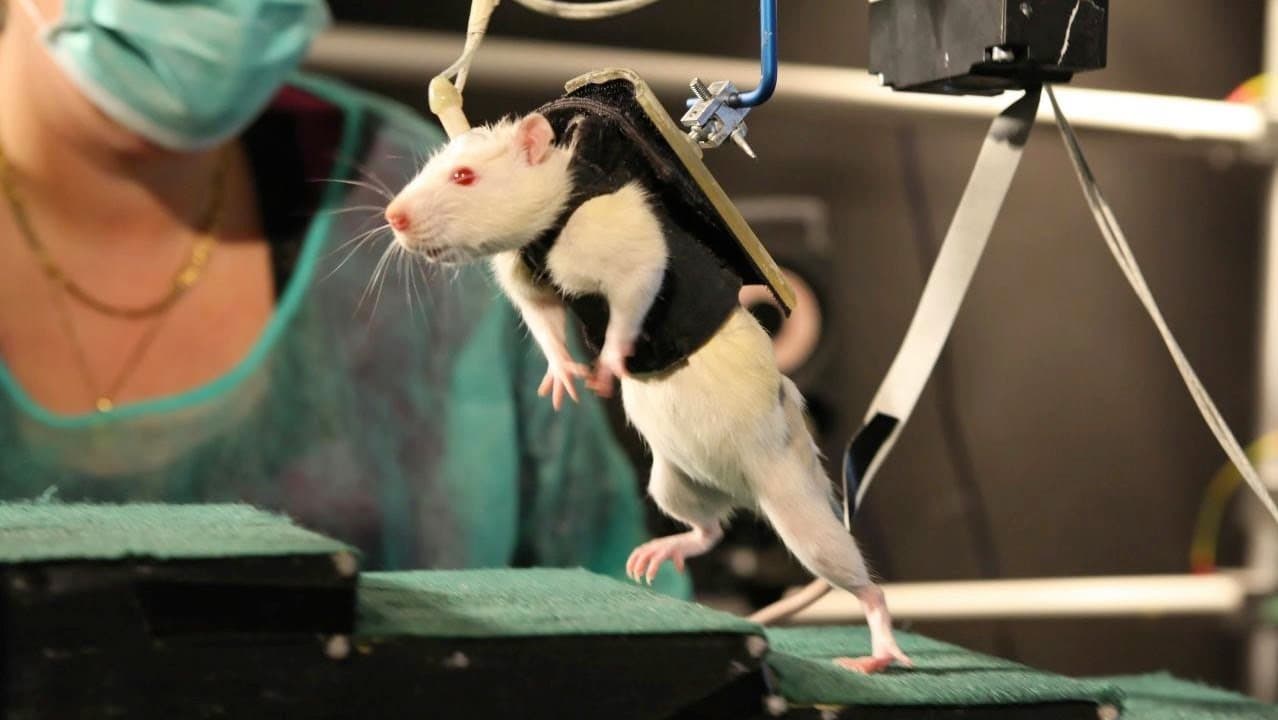
Researchers in Lausanne are using pharmaceuticals, electrical signals, and motivation to repair spinal damage in rats, leading to remarkable results.
Transcript
We have all heard of mind over matter, but is it possible that the right motivation can actually help repair spinal damage?I have come to Lausanne, Switzerland to find out about some innovative research being done to repair the spinal cords of rats using pharmaceuticals, electrical signals. And the key ingredient? Motivation. Sometimes with the rig... Read More
Key Insights
- 🪗 The traditional approach to spinal cord injury research focuses on regenerating damaged nerve fibers, but researchers in Lausanne are taking a different approach by stimulating the spinal cord with synthetic neural transmitters and electrical signals.
- 🤩 Motivation is a key factor in the recovery process, as rats are more likely to regain voluntary movement when they are motivated through rewards and incentives.
- 🥳 The brain's involvement is crucial for full voluntary control, as rats regain involuntary movement through treadmill stimulation.
- 🥳 Researchers in Lausanne have observed that the rat's spinal cord is more capable of rewiring itself than previously expected, allowing for the detouring around the injury and reconnection of dormant neural networks.
Install to Summarize YouTube Videos and Get Transcripts
Explore YouTube Video Summarizer or Get YouTube Transcript Extractor
Questions & Answers
Q: How do researchers in Lausanne repair spinal damage in rats?
Researchers in Lausanne use a combination of synthetic neural transmitters and electrical stimulation to reactivate healthy neural cells below the injury, leading to restored movement in rats.
Q: What is the role of motivation in the recovery process?
Motivation plays a crucial role in the recovery process, as researchers have found that rats are more likely to regain voluntary movement when they are motivated through reward-based training and incentives such as Swiss chocolate.
Q: Can rats regain voluntary movement without the involvement of the brain?
No, at this stage of the research, rats regain movement through treadmill stimulation, which means the movement is involuntary and independent of the brain. The involvement of the brain is necessary for full voluntary control.
Q: What are the potential implications of this research for humans with spinal injuries?
This research provides new hope for humans with spinal injuries, as it demonstrates the potential for rewiring the spinal cord and restoring voluntary movement. Further studies are needed to determine the effectiveness of this intervention in humans.
Summary & Key Takeaways
-
Researchers in Lausanne are experimenting with a new approach to repair spinal damage in rats by stimulating the spinal cord with synthetic neural transmitters and electrical signals.
-
By administering a cocktail of synthetic neural transmitters followed by electrical stimulation, the researchers are able to reactivate healthy neural cells below the injury, leading to restored movement in the rats.
-
Motivation plays a crucial role in the recovery process, as shown by reward-based training and the use of incentives such as Swiss chocolate to encourage the rats to walk.
Read in Other Languages (beta)
Share This Summary 📚
Summarize YouTube Videos and Get Video Transcripts with 1-Click
Try YouTube Summary with ChatGPT & Claude or YouTube Transcript Generator
Explore More Summaries from Veritasium 📚

Summarize YouTube Videos and Get Video Transcripts with 1-Click
Try YouTube Summary with ChatGPT & Claude or YouTube Transcript Generator